
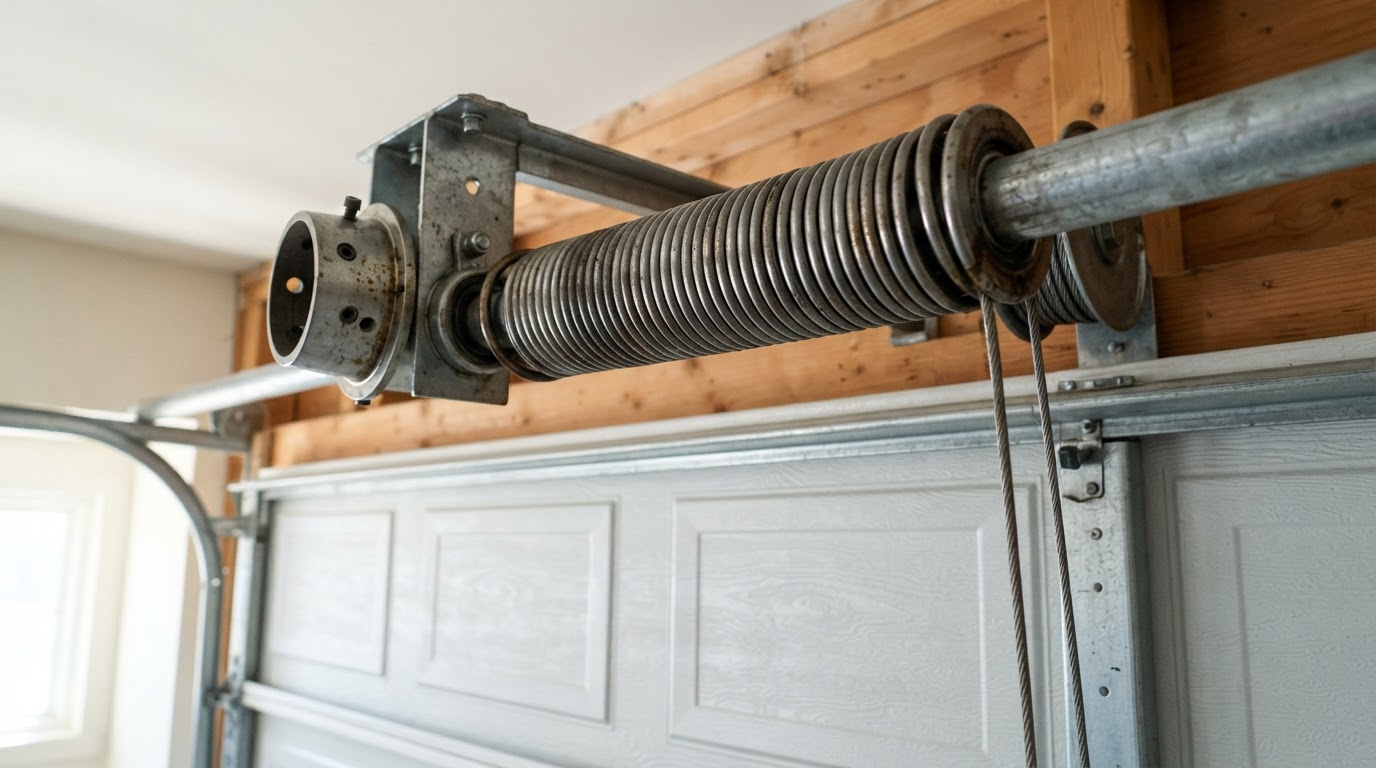
Here's how to tell which one your garage actually needs.
What "cycles" actually means
One cycle is one full open and one full close. Every spring is rated for a certain number of cycles before the steel fatigues and snaps.
- Standard springs are typically rated around 10,000 cycles. Most builder-grade doors come with these.
- High-cycle springs are rated 25,000 to 50,000+ cycles. They're made from thicker wire and/or longer coils, so each turn of the spring is under less stress.
The spring doesn't care how old it is. It cares how many times it's been used. That's why two neighbors with identical doors can have springs fail years apart.
How long will your springs last? Do the math
Count how many times your door goes up and down on a normal day. Include every car trip, every time the kids ride bikes out, every time someone uses the garage as the front door.
| Cycles per day | Standard (10,000) | High-cycle (25,000) | High-cycle (50,000) |
|---|---|---|---|
| 2 | ~13.7 years | ~34 years | 50+ years |
| 4 | ~6.8 years | ~17 years | ~34 years |
| 6 | ~4.6 years | ~11.4 years | ~23 years |
| 10 | ~2.7 years | ~6.8 years | ~13.7 years |
Estimates only. Spring sizing, door balance, lubrication, and temperature all affect real-world life.
If your household is in the 2-cycle row, standard springs are usually fine. If you're at 6 or more — common for families who use the garage as the main entrance — standard springs will likely be back on your to-do list within a few years.
When high-cycle springs are worth it
- The garage is your main entrance. This is the biggest one. If everyone comes and goes through the garage, you're burning cycles fast.
- You have a heavy door. Insulated, double-wide, or wood doors put more load on the springs. High-cycle springs sized correctly for the weight hold up better.
- You plan to stay in the home. The upfront difference is modest. Over ten years, it can mean one spring replacement instead of three.
- You've already had a spring break early. If your last set didn't make it five years, your usage is telling you something.
When standard springs are fine
- The garage is mostly storage or a second entrance
- You're selling the home in the next year or two
- It's a light, single-car, non-insulated door that gets used once or twice a day
We'll tell you honestly which camp you're in. If standard springs fit how you use your door, that's what we'll recommend.
Three things matter more than the label
1Correct sizing.
A spring has to match your door's actual weight, height, and drum size. A high-cycle spring sized off a generic chart can fail just as fast as a cheap one. A good tech weighs and measures the door, then balances it after installation — a balanced door stays put when you lift it halfway by hand.
2Replace them as a pair.
If your door has two springs and one broke, the other is the same age and has done the same work. Replacing both in one visit saves you a second service call a few months later.
3Torsion vs. extension.
Most modern doors use torsion springs mounted on a bar above the door. Many older Bay Area homes still have extension springs running along the horizontal tracks. Extension springs should always have safety cables threaded through them, so a snapped spring can't whip across the garage. If yours don't, that's worth fixing whether or not you upgrade.
Why springs seem to break on cold mornings
Steel is a little less forgiving when it's cold, and a spring that's already near the end of its cycle life often gives out on the first chilly morning of the season. Bay Area winters are mild, but if your springs are older and the door has started feeling heavy, this is a good time to have them checked — before the door won't open on the day you need to get somewhere. (Not sure? Here are 6 signs your springs are failing.)
Never DIY a torsion spring
A wound torsion spring stores enough energy to cause serious injury. Replacing one requires winding bars, the right spring size, and experience. Lubricating your springs and testing door balance are fine to do yourself; adjusting or replacing them is not.
Frequently Asked Questions
How long do garage door springs last?
Standard springs are typically rated for about 10,000 cycles, which is roughly 4–7 years for most households. High-cycle springs are rated for 25,000–50,000+ cycles and can last two to five times longer with the same use.
Are high-cycle springs worth the extra cost?
If your garage is your main entrance or you open the door six or more times a day, usually yes. The price difference is modest compared to paying for another spring replacement a few years later.
Can I put high-cycle springs on my existing door?
In most cases, yes. High-cycle springs are sized to your door's weight like any other spring. Your tech will confirm the right size and may need to adjust the setup on the torsion bar.
Should I replace both springs if only one broke?
Yes, in almost every case. Both springs are the same age and have done the same number of cycles. The second one is usually not far behind.
How do I know if my springs are about to fail?
Common signs include a door that feels heavy when lifted by hand, a door that won't stay put halfway open, a visible gap in the coils, or a loud bang from the garage. See our guide to the 6 warning signs.
How much does spring replacement cost?
It depends on your door's size, weight, and which springs you choose. Our Bay Area repair cost guide explains what drives the price. We give a free estimate and you approve the cost before we start.
The bottom line
Standard springs aren't bad springs. They're just rated for a lighter workload than many Bay Area families put on them. Count your daily cycles, think about how long you'll be in the home, and choose the spring that fits how you actually live.
If your spring is broken or your door is feeling heavy, call (669) 369-3795. We carry standard and high-cycle springs on the truck, so most spring jobs are done in one visit, same day, anywhere in San Jose and the Bay Area.